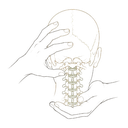
Hypopressive Training
Hypopressive training in Milan
Work on breathing, posture, deep core, pelvic floor and the management of internal pressures, integrated with osteopathic assessment when useful for the person's path.
The method
A different approach to core and breathing
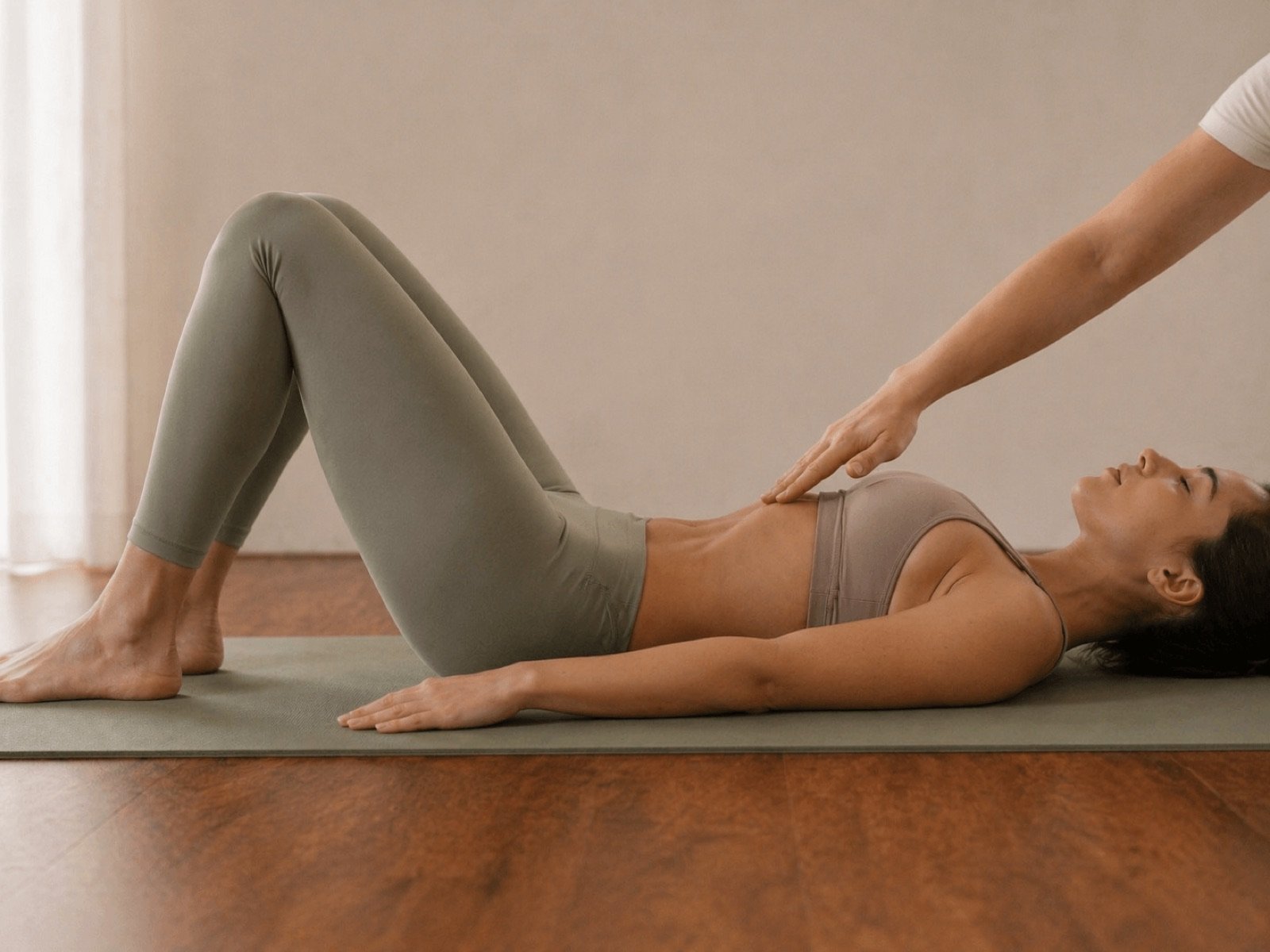
Hypopressive training works through specific postures, breathing and diaphragm control, with the aim of supporting better management of internal abdominal, thoracic and pelvic pressures. It is offered as a standalone, personalised programme, which can be integrated with osteopathic assessment when useful.
The work is based on sequences of postures combined with precise breathing techniques. These are not high-intensity exercises: it is slow, controlled and progressive work that requires awareness and concentration.
Every hypopressive training programme is individual and built from the assessment, respecting the person's abilities and pace.
How it works
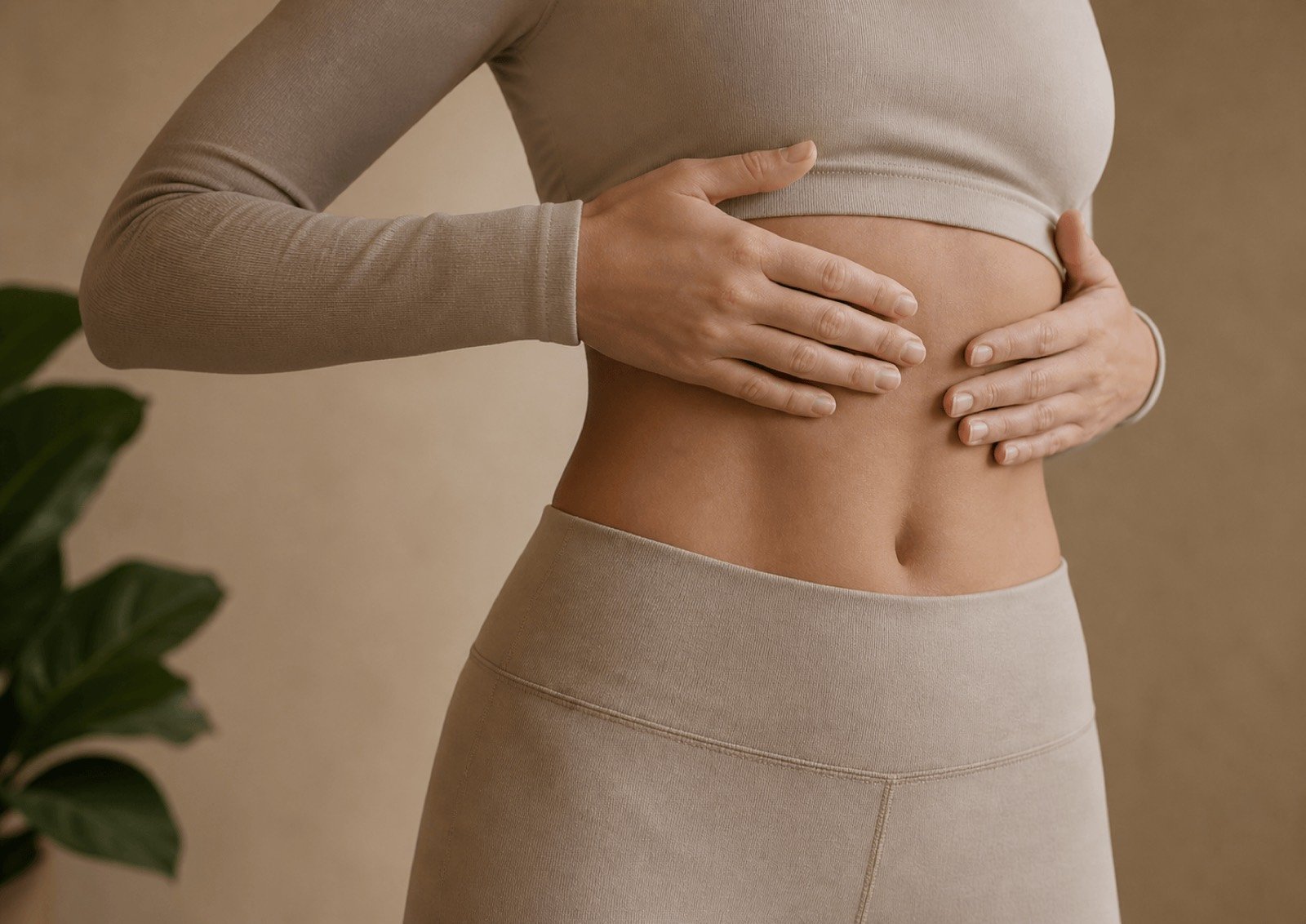
Three dimensions of work
Posture
Postural sequences that change the body's set-up, reducing compensatory curves and improving alignment.
Breathing
Expiratory apnoea and diaphragmatic aspiration techniques that create negative pressure in the abdominal cavity.
Internal pressures
Rebalancing of pressures in the abdominopelvic cavity, with a supporting effect on the pelvic floor.
When it may be useful
Situations in which hypopressive training can accompany you
Hypopressive training may be useful, when indicated, in programmes related to various situations.
Postpartum
Recovery of abdominal and pelvic floor tone after pregnancy, with attention to physiological timing.
Pelvic floor
Awareness and activation of the pelvic floor, in cases of hypotonia or hypertonia.
Diastasis recti
Support for the recovery of the linea alba by rebalancing pressures, without exercises that increase outward pressure.
Deep core
Weakness of the deep core and difficulty maintaining stability and posture.
Posture and breathing
Dysfunctional breathing or postural patterns that affect the management of internal pressures.
Postural support
In some cases of scoliosis, it may be considered as support for postural, breathing and trunk control work, always after an individual assessment.
In depth
Internal pressures, breathing and posture
Breathing, diaphragm, abdominal wall, pelvic floor and posture work in constant relation. Hypopressive training uses specific positions and breathing work to support a more balanced distribution of internal pressures, without overloading the pelvic floor.
This is why it can be included in programmes dedicated to postpartum, deep core, posture and body awareness.
In the presence of scoliosis, hypopressive training is not offered as a structural correction of the spine, but it may be considered as support for postural, breathing and trunk control work. Its inclusion in the programme is always considered based on the individual situation and, when necessary, in collaboration with the relevant professionals.
Diaphragm
The engine of breathing and the main regulator of internal pressures.
Transversus abdominis
Deep muscular layer responsible for containing the viscera.
Pelvic floor
A fundamental muscular structure for support and continence.
When to practise it
The right time
Hypopressive training is generally recommended away from meals and, when possible, in the early hours of the day or at times when the person can devote themselves to the practice without rushing. The breathing and postural work can be energising for some people; for this reason, especially in the early stages, it is better to avoid practising immediately before sleeping.
The best time is in any case assessed according to the person, their routine, the body's response and the goals of the programme. The practice is always adapted to the initial assessment and to individual tolerance.
Practical guidelines
- Preferably away from meals
- Often recommended in the morning or the first part of the day
- Avoid just before sleeping if it tends to be overly energising
- To be done at a quiet time, without rushing
- To be adjusted according to individual response
- Postpartum or with pelvic symptoms, always after an assessment
- In case of discomfort, dizziness or unease, stop and reassess
Where sessions take place
At the practice or at home
Individual hypopressive training sessions take place at Clinica Luce and are also available at home in areas of central Milan.
At the practice · Porta Romana
Clinica Luce
Corso di Porta Romana 120, Milano
I see patients for osteopathy treatments and individual hypopressive training sessions.
Directions · Google Maps Request an appointmentAt home · central Milan
Check coverage
Sessions are also available at home in areas of central Milan. Leave me your address: I will check the area and get back to you.
Thank you! I will let you know whether the service is available in your area.
Frequently asked questions
On hypopressive training
Is hypopressive training useful postpartum?
Does hypopressive training help the pelvic floor?
Is hypopressive training suitable for diastasis recti?
What does rebalancing internal pressures mean?
Can hypopressive training be useful for scoliosis?
Can I start right after giving birth?
When is the best time to do hypopressive training?
Can hypopressive training stimulate the bowel?
Start your programme
Find balance again from within
Contact me for an assessment and find out whether hypopressive training is the right programme for your needs.
Request an appointment